“Let us bear witness to the good work the Church does, far from the media spotlight.”


Eminence, on the anniversary of your 25 years of Episcopacy this March 19, 2026, what is your particular act of thanksgiving?
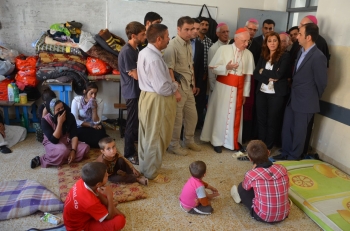
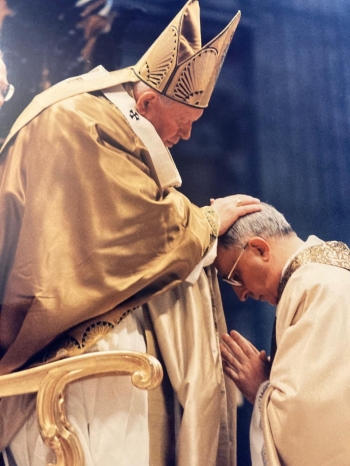
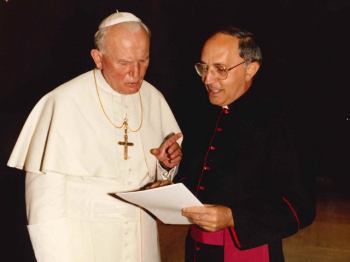
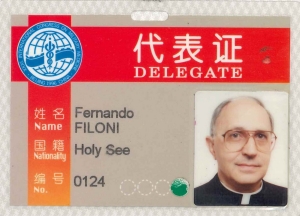
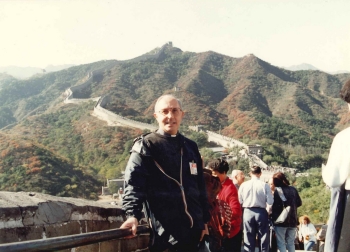
On March 19, twenty-five years ago, Pope John Paul II, in the presence of other ecclesiastics, consecrated me a bishop. In addition, this day is also the anniversary of when the Holy Father appointed me as his diplomatic representative to Iraq and Jordan. Before my episcopal consecration, I had just completed my time in Hong Kong, where I had spent eight years learning to love and to know the Church in China, which was emerging at that time from many years of suffering and martyrdom. While there, I met many men and women who had borne witness as confessors of the faith, and about many others of whom I had heard of and had read about their martyrdom. Therefore, it was also a period in which I gave thanks to God for having permitted me to come to know this scarcely known reality; in fact, very little was known at the time. I had come to know it deeply because I had direct contact with those who had suffered, and access to written accounts of the highest spiritual and ecclesial value, which reached me after decades of immense hardship. Therefore, prior to my appointment, I had already had an extremely important experience, which was profoundly marked by faith through the testimony of these men and women, religious brothers and sisters, and clergy and laity who had suffered under Chinese communism. When Pope John Paul II chose me for the episcopate, it was difficult to say “no”. At times, I reflected on what Saint Augustine notably said, “It is more important to be worthy of bearing the weight of the episcopate than to be a bishop” (Sermon 340/A). What he means here is that there is an immense responsibility that accompanies this position, and on a human level, we consider ourselves humanly, culturally, spiritually, and pastorally inadequate. I was also extremely fond of something else St Augustine had said, and, as if in conversation, I would say to him, “Yes, but you accepted”; and in reply he seems to say: “I cannot withdraw from the voice of God”. After a few days’ reflection, I accepted because there was no escaping the logic of obedience and the papal call, nor the fullness of the priestly ministry. After some time, I left Hong Kong and prepared myself for this new adventure as a bishop and as the papal representative to Iraq and Jordan. These were complex countries because, at that time, although Jordan was peaceful, it needed our support as the Christian presence there was small. Iraq, on the other hand, was a country with a recent past full of turmoil, with small sui juris Churches, whilst the majority of the population was Muslim, either Shia or Sunni.
Can you recall the formative years of your youth and tell us who the priestly and pastoral role models were that you looked up to?
My vocation took root in my home region of Puglia, during an extraordinarily significant period in the life of the universal Church. This was the period following Pius XII, when Pope John XXIII and, above all, the Second Vatican Council were stirring up a great deal of excitement. In that period at the seminary, we did not speak during either lunch or dinner, except on Sundays; but we read and listened to reports of the Council. In a certain sense, even though we were young and did not participate directly in the Council, we were immersed in it because we followed all the events, while trying to understand them as best we could given their theological and social complexity. We paid close attention to the news reports and discussed the important theologians, who aroused in us a serious desire to get to know them. I remember that for me personally it was a very important period in which I came to know the Church. It was no coincidence, then, that when I had to choose my episcopal motto, the words ‘Lumen gentium Christus’ (Christ is the light of the nations) came to mind, which are the first three words of the Dogmatic Constitution on the Church from the Second Vatican Council. Later, after the Council, whilst studying theology, we found ourselves sitting on the very same benches used by the Council Fathers, which the Holy See, having cleared St Peter’s Basilica, distributed amongst the Italian seminaries. As for the people from that period of my formation, I remember above all a spiritual director who, at a crucial juncture in my life, helped me enormously to discern what I should do. That spiritual director was instrumental in my decision on whether or not to continue; I was eighteen at the time. Among the figures in the Church, I recall the extraordinary human qualities of Popes such as Saint John XXIII, and the intellectual acumen and inner suffering of a man such as Paul VI. However, I looked to ordinary parish priests who lived unassuming lives and were always ready to serve their local parishes day in, day out. I was deeply fascinated by missionary life, which I seriously considered as an alternative.
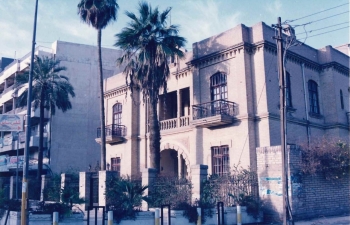 Apostolic Nunciature in Baghdad, Iraq